Should you caulk around a toilet base? How to do it right
Yes, in most bathrooms you should caulk a toilet base. A bead of caulk keeps mop water, splashes and urine from seeping under the toilet where it can't be cleaned, and it helps stop the bowl from shifting. Many plumbers leave a short gap at the back so a hidden leak from the wax ring shows up on the floor instead of rotting the subfloor. Check your local plumbing code, as some areas require fixtures to be sealed to the floor.
The case for caulking a toilet base
- Hygiene. Without caulk, the gap under the edge of the bowl collects water and grime you can't reach.
- Stability. A bead helps keep the toilet from rocking slightly on uneven floors. It's not a substitute for proper bolts and shims, though.
- Appearance. A clean, even bead finishes the installation.
- Code. Some local plumbing codes require fixtures to be sealed where they meet the floor.
The case for leaving a gap at the back
The main argument against sealing all the way around is leak detection. If the wax ring or flange fails and the toilet is caulked on every side, water can spread under the floor unseen for a long time. Leaving 1 to 2 inches open at the back lets water escape where you'll eventually spot it. Many installers consider this a reasonable compromise: caulk the front and sides, leave a small gap at the back.
Choosing a sealant to caulk a toilet base
Bathrooms are wet, humid and cleaned often, so the caulk needs to resist moisture and mildew. 100% silicone is a common choice for this reason.
Senta 100% RTV Silicone is mold and mildew resistant, stays flexible, and bonds to most common non-porous building materials. White or Translucent White matches most toilets.
Watch the floor material:
- Glazed ceramic or porcelain tile, sheet vinyl, vinyl plank: non-porous surfaces where 100% silicone is a common choice.
- Natural stone (marble, travertine, granite) or concrete: Senta silicone isn't recommended on porous natural stone or concrete. Use a sealant the stone or flooring supplier recommends, typically a neutral-cure product.
Also note that acetoxy silicone can yellow if exposed to bleach while curing, so hold off on bleach-based cleaners until the bead has cured.
Tools and materials
- Utility knife and plastic scraper
- Isopropyl alcohol and clean rags
- Painter's tape
- 100% silicone sealant in white or translucent white
- Caulking gun
- Tooling spatula, spoon or gloved finger
- Paper towels
- Gloves
How to caulk around a toilet, step by step
- Check the toilet first. Make sure it doesn't rock and the closet bolts are snug. If it rocks, shim it before caulking. Caulk won't fix a loose toilet, and a moving bowl will tear the bead.
- Remove old caulk. Cut and scrape it away completely. See how to remove old silicone caulk.
- Clean thoroughly. Scrub the floor and the base of the bowl, then wipe with isopropyl alcohol. Let everything dry completely. Bathrooms often need a few hours, especially after mopping.
- Tape both sides. Run painter's tape on the floor and on the toilet base, about 1/8 in away from the joint, following the curve. Use short pieces around the curves.
- Ventilate. Turn on the exhaust fan or open a window. Acetoxy silicone releases a vinegar smell while it cures, and it isn't meant for totally confined spaces.
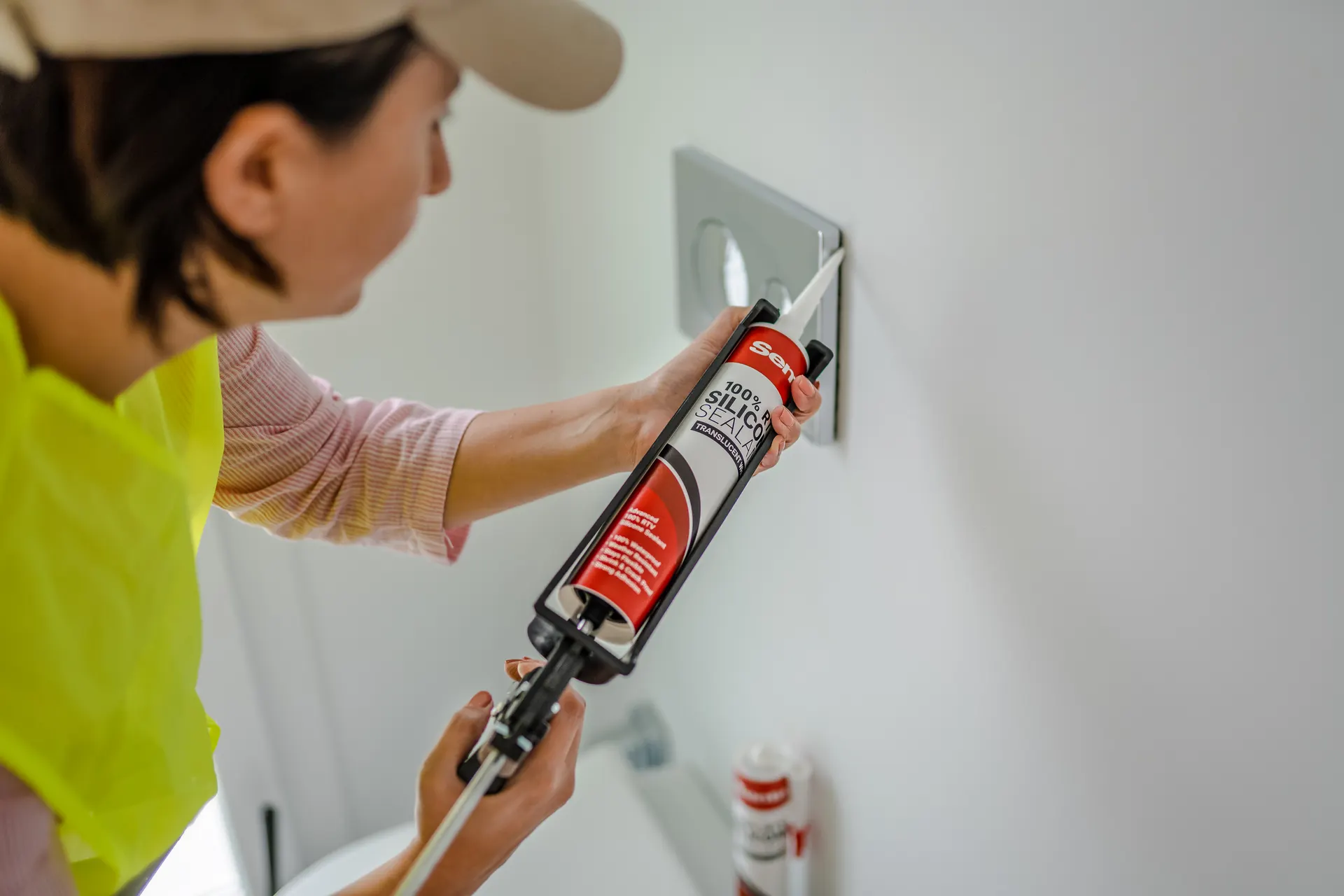
- Apply the bead. Cut a small nozzle opening and run a steady bead around the front and sides. Stop short at the back if you're leaving a leak-detection gap.
- Tool it. Smooth the bead with one continuous pass, within 5 minutes for Senta silicone.
- Pull the tape. Peel it away at a low angle while the silicone is still wet.
- Let it cure. Senta silicone cures at about 1/8 in of bead depth per 24 hours. You can usually use the toilet carefully, but avoid mopping the joint until the bead has cured.
When caulk isn't the answer
- Water appears around the base after flushing: that's usually the wax ring or flange. Caulking over it hides the problem. Pull the toilet and replace the ring.
- The floor feels soft near the toilet: the subfloor may be damaged. Fix that first.
- The toilet rocks: shim and tighten before caulking.
For other bathroom joints, see how to caulk a bathtub.
FAQ
Should I caulk all the way around a toilet?
Many plumbers leave a small gap at the back so a wax ring leak becomes visible. Check your local plumbing code, as some areas require full sealing to the floor.
Silicone or acrylic caulk for a toilet base?
100% silicone is a common choice for its moisture and mildew resistance on non-porous floors like glazed tile and vinyl. On natural stone or concrete, follow the flooring supplier's recommendation.
How long before I can use the toilet after caulking?
You can usually use it gently soon after, but avoid disturbing or mopping the bead until it has cured. Senta silicone cures at about 1/8 in of depth per 24 hours.
For toilet bases on tile or vinyl, consider Senta 100% RTV Silicone in White.