How to caulk a bathtub
To caulk a bathtub, remove all old caulk, clean and dry the joint, mask both sides with painter's tape, run a continuous bead of 100% silicone, smooth it within a few minutes, pull the tape and let it cure before using the tub. The two things that make or break the job are a truly clean, dry joint and tooling the bead before it skins over.
Here is the full process, step by step.
Tools and materials
- 100% silicone sealant (one 10.1 fl oz cartridge usually covers a standard tub)
- Caulking gun with a smooth trigger
- Utility knife and plastic scraper
- Isopropyl alcohol and lint-free rags
- Painter's tape
- A caulk smoothing tool or a gloved finger
- Paper towels and a trash bag for cleanup
- Gloves and good ventilation (open window or exhaust fan)
Before you start: pick the right sealant
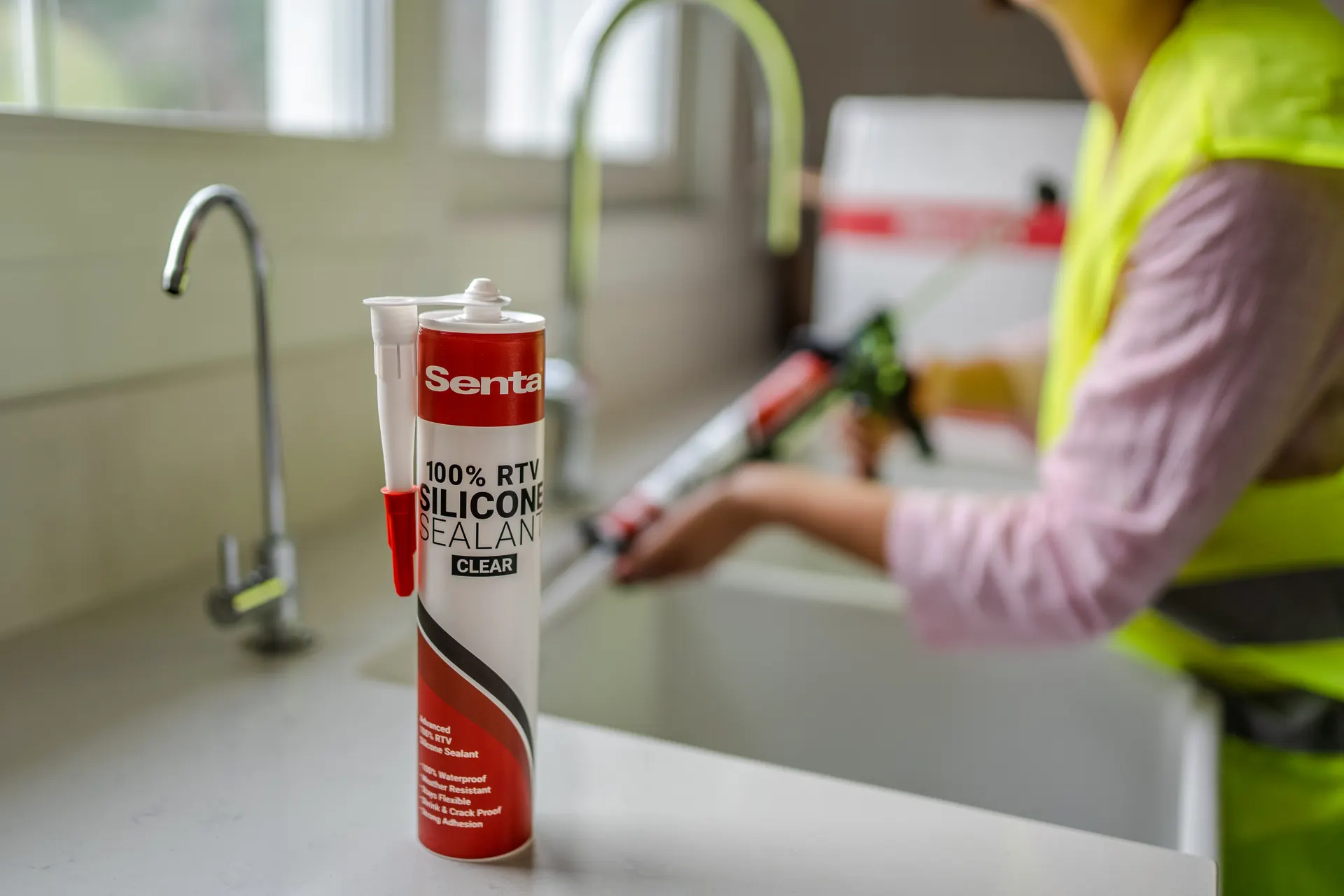
A tub joint is wet almost every day and moves slightly as the tub fills and empties, so it needs a flexible, water-resistant sealant. A 100% silicone is the standard choice. Senta 100% RTV Silicone is mold and mildew resistant and rated for ±25 % joint movement (ASTM C920 Class 25).
Senta silicone is an acetoxy cure, which gives off a vinegar smell while it cures. It works on glazed ceramic tile, porcelain, enameled steel, acrylic and fiberglass tubs, but it is not recommended for porous natural stone such as marble or travertine surrounds. For stone, follow the stone supplier's recommendation for a stone-safe, neutral-cure sealant.
How to caulk a bathtub, step by step
- Remove the old caulk. Cut, peel and scrape it all out, then clean off the residue. New silicone does not bond well to old silicone. See our guide on removing old silicone caulk.
- Clean with alcohol and let it dry. Wipe both surfaces with isopropyl alcohol to remove soap scum and oils. Then let the joint dry thoroughly, ideally overnight with the fan on.
- Fill the tub with water (optional but helpful). A full tub sits at its lowest position. Caulking it that way means the bead is not stretched the first time someone gets in. Drain it only after the silicone has cured.
- Tape both sides of the joint. Run painter's tape on the tile about 1/8 inch above the joint and on the tub about 1/8 inch below it. This gives you crisp, straight edges.
- Cut the nozzle. Cut the tip at a 45-degree angle, starting small. You can always cut it bigger. For most tub joints, a bead around 1/4 inch wide is plenty.
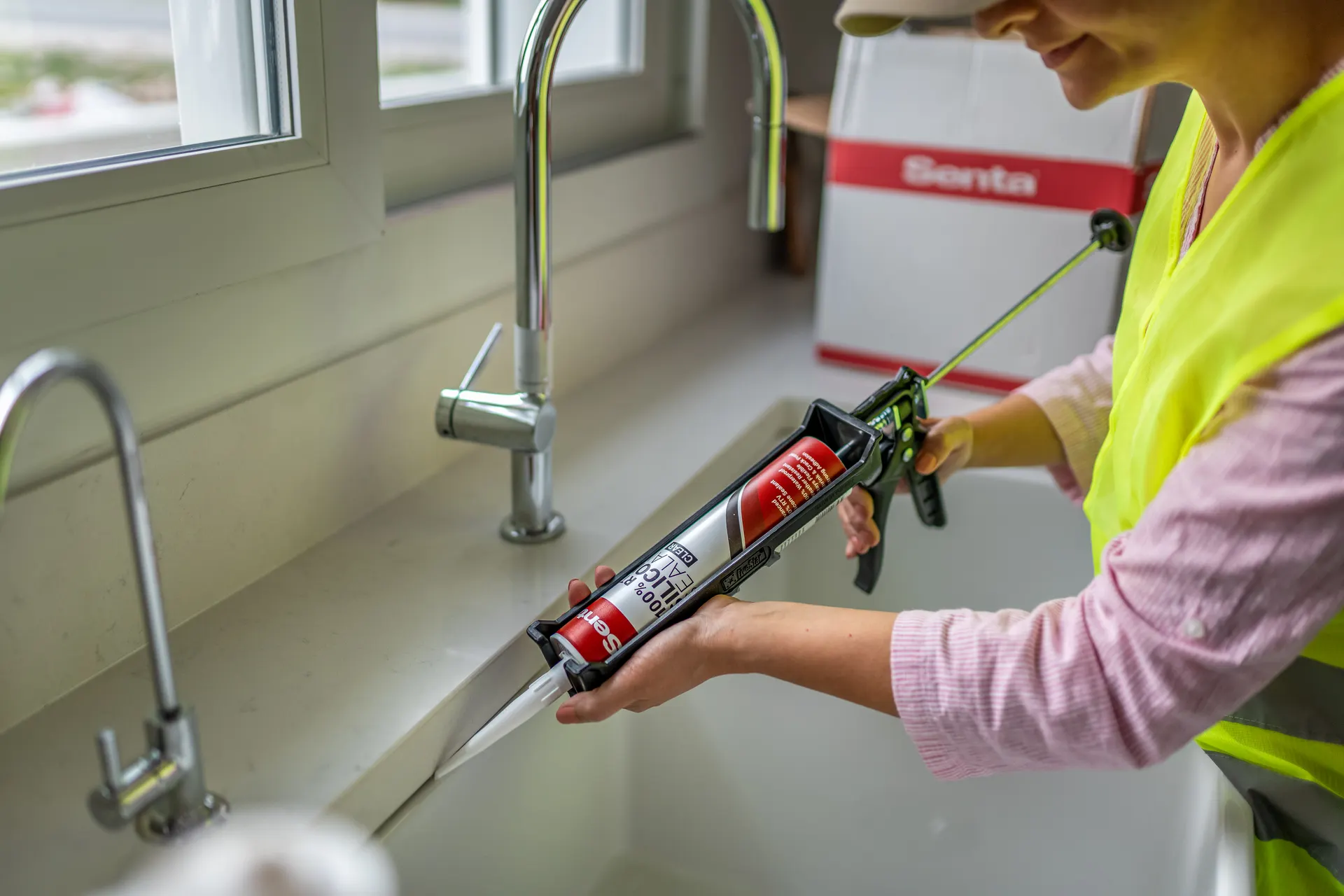
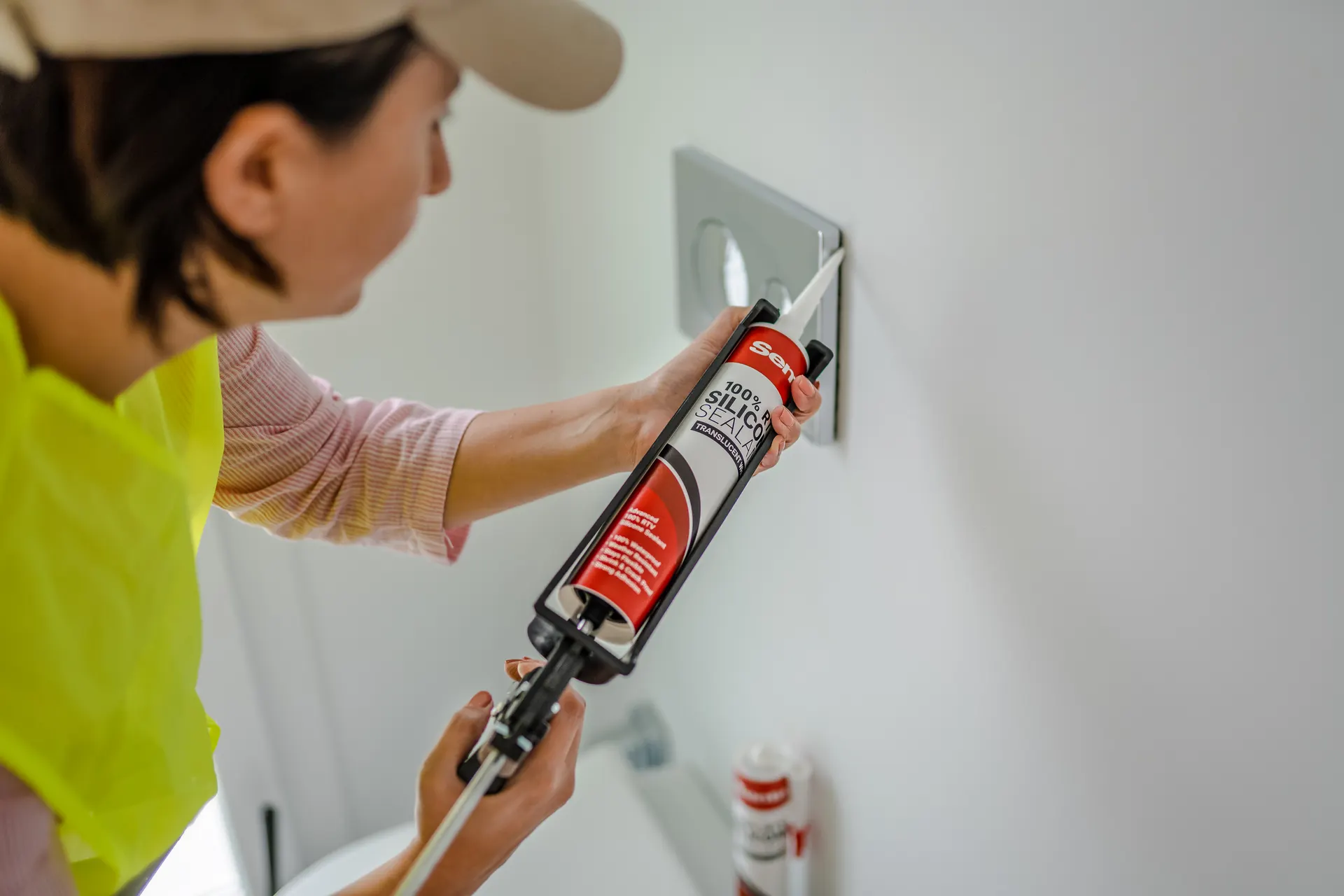
- Run the bead. Hold the gun at about 45 degrees and push or pull it along the joint at a steady pace, keeping constant pressure on the trigger. Work one wall at a time, starting in a corner.
- Tool it right away. Senta silicone should be tooled within 5 minutes, before it starts to skin (skin time is 8 to 20 minutes at 70 °F and 50 % relative humidity). Draw a smoothing tool or a gloved fingertip along the bead in one smooth pass, pressing it into the joint.
- Pull the tape immediately. Lift the tape away from the bead at a low angle while the silicone is still soft. Waiting until it skins can tear the edge.
- Let it cure. Senta 100% RTV Silicone cures at a rate of 1/8 inch bead per 24 hours. Keep the tub dry for at least a day, and longer if your bead is thicker than 1/8 inch. Keep the room ventilated while it cures.
Tips for a cleaner result
- Do short sections. On a long wall, tool and pull tape in sections so the silicone does not skin before you get to it.
- Wipe the tool often. Keep a paper towel handy and clean your finger or tool after each pass.
- Don't overwork it. One or two smooth passes look better than many. Extra passes drag silicone onto the tile.
- Fill deep gaps first. If the gap is wider or deeper than about 1/4 inch, insert backer rod before caulking. Our article on joint size and backer rod explains how.
Mistakes to avoid
- Caulking a joint that is still damp underneath
- Using a bleach cleaner right before or right after caulking (bleach can yellow acetoxy silicone while it cures)
- Running a bead over leftover old caulk
- Showering too soon, before the bead has had time to cure
Keeping the new caulk clean
Run the exhaust fan during and after showers, squeegee the walls, and wipe the bottom bead dry when you can. Less standing water means less mildew. Senta silicone is mold and mildew resistant, but soap scum on the surface can still grow mildew if it stays wet.
For a standard white tub and tile, Senta 100% RTV Silicone in White gives a clean, bright finish.
FAQ
Should I fill the tub with water before caulking?
Many installers do. A full tub settles to its lowest position, so the silicone cures in the stretched position and is less likely to pull away when the tub is used.
How long after caulking can I shower?
Senta 100% RTV Silicone cures at about 1/8 inch per 24 hours. Wait at least 24 hours for a typical bead, and longer for deeper beads or cool, dry conditions.
Can I use acrylic latex caulk around a bathtub?
It is not a good fit. Siliconized acrylic latex caulk is not meant for joints permanently exposed to water. Use 100% silicone for the tub-to-wall joint.