Can you paint over silicone caulk?
No, you can't successfully paint 100% silicone caulk. Paint won't wet out on cured silicone, so it beads up, stays tacky or peels off in strips within weeks. If a joint needs to be painted, use a paintable caulk such as a siliconized acrylic latex, or pick a silicone color that already matches.
Can you paint silicone? Why the answer is no
Cured silicone has very low surface energy. In plain terms, liquids don't want to spread across it, the same way water beads on a waxed car. Latex and oil paints both need to grip the surface they're applied to, and silicone gives them almost nothing to hold.
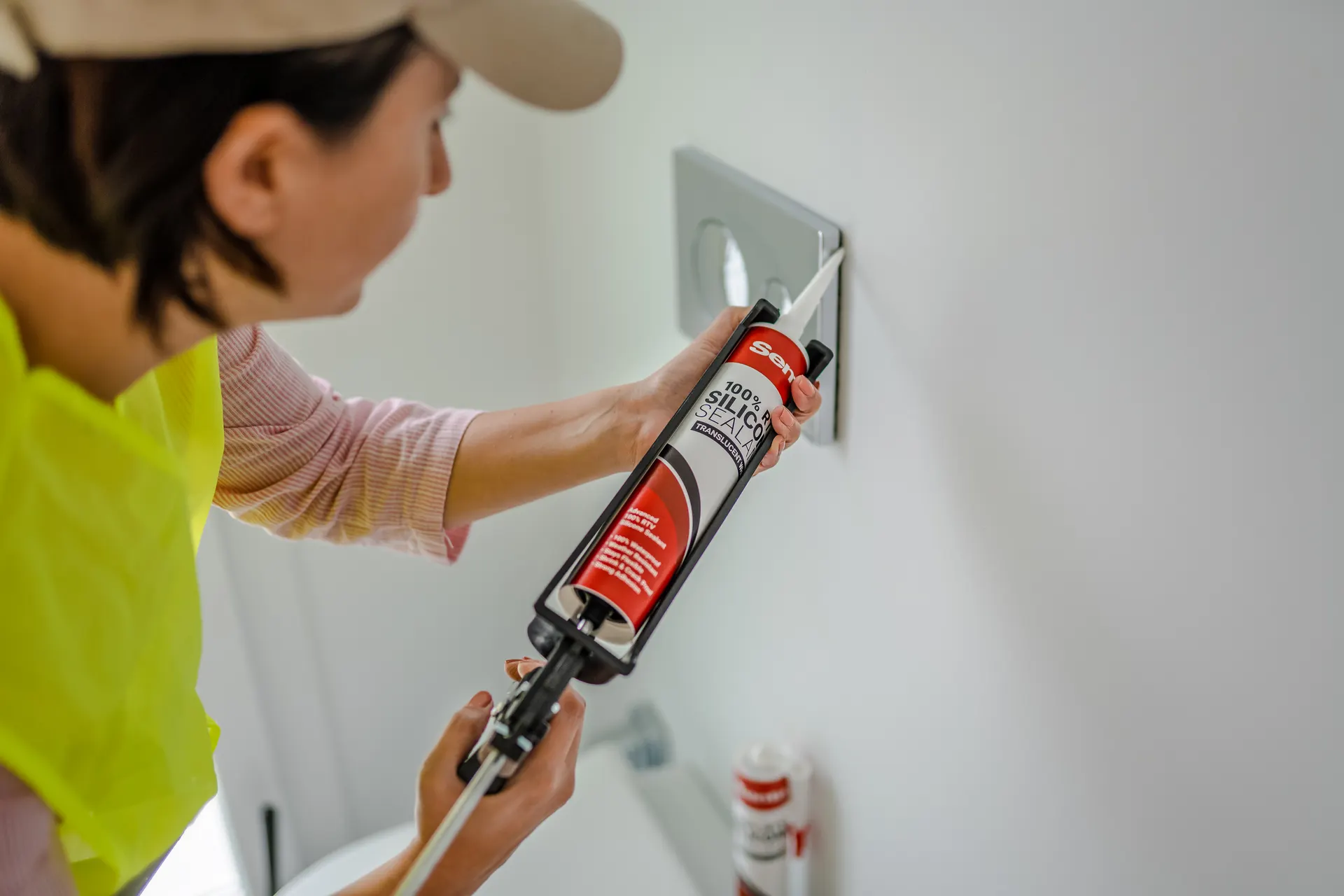
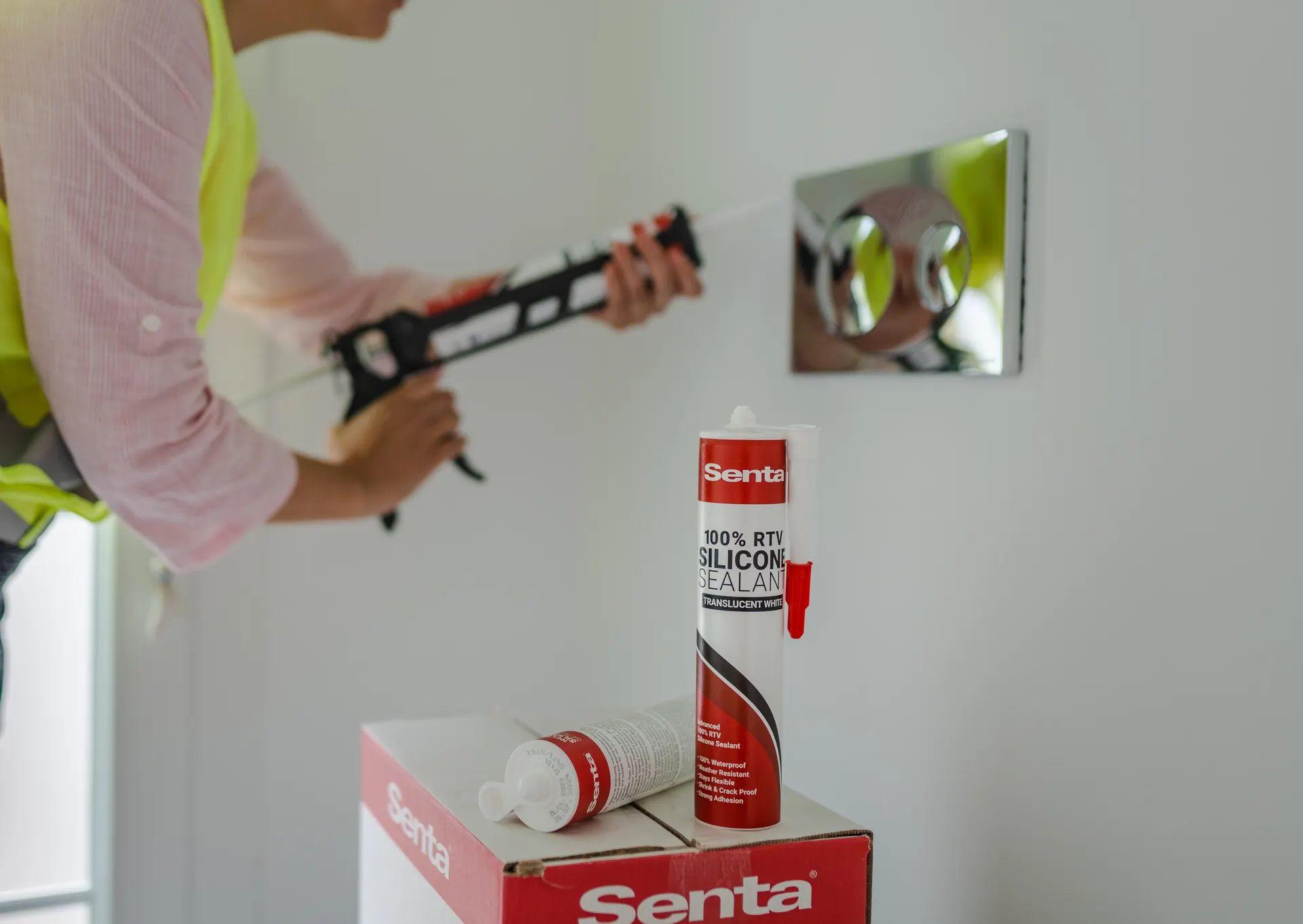
That's not a defect. It's part of why silicone is so useful in bathrooms, kitchens and on exteriors: water, soap scum and dirt also have a hard time sticking to it. The product data sheet for Senta 100% RTV Silicone lists it plainly as "not paintable", and most 100% silicones carry the same note.
Some people try sanding, priming or wiping the bead with alcohol first. You may get paint to stay for a while, but it usually cracks as soon as the joint moves, because silicone stretches far more than a paint film can.
What to use when a joint needs paint
The easiest way around the problem is to avoid it. Plan the caulk around the finish:
- Joint will be painted: use a paintable caulk. Senta Siliconized Acrylic Latex Caulk is paintable after curing, cleans up with water and works on porous surfaces like wood, plaster, brick and concrete.
- Joint stays wet or sees constant water (tub, shower, sink): use 100% silicone and choose the color now. Senta silicone comes in White, Clear and Translucent White, with custom colors on request.
- Joint on glass or metal that won't be painted: silicone is the usual pick for adhesion and flexibility.
If you're torn between the two types, our guide to silicone vs. acrylic caulk walks through the trade-offs.
Already have silicone where you want paint?
If someone used silicone on trim or a wall joint that now needs painting, the reliable fix is to take it out and start over. Painting over the top almost always fails.
Tools and materials
- Utility knife or caulk removal tool
- Plastic scraper
- Isopropyl alcohol and clean rags
- Painter's tape
- Paintable siliconized acrylic latex caulk
- Caulking gun
Steps
- Cut the bead. Slice along both edges of the old silicone with a sharp blade, holding it low so you don't gouge the trim or wall.
- Pull it out. Grab an end and peel. Silicone usually comes out in long strips.
- Scrape the film. Silicone leaves a thin, nearly invisible film. Scrape it off with a plastic scraper, then wipe the joint with isopropyl alcohol. Any leftover film will repel the new caulk and the paint.
- Let it dry. The joint must be clean and dry before you recaulk.
- Tape and caulk. Run painter's tape on both sides if you want crisp lines, apply the paintable caulk, tool it smooth and pull the tape while it's wet.
- Wait, then paint. Let the caulk cure as the data sheet directs before painting.
For more detail on step 3, see how to remove old silicone caulk.
How to tell what's in the joint now
Not sure whether the old caulk is silicone? A few quick checks:
- Feel: silicone feels rubbery and slick; acrylic caulk feels firmer and slightly chalky once painted.
- Water test: drip water on it. Silicone makes tight beads; acrylic usually lets water spread a bit.
- Paint test: dab a little paint on a hidden spot. If it crawls away from the bead or rubs off with a fingernail once dry, it's silicone.
Painting next to silicone
You can paint up to a silicone bead. Mask the bead with tape, paint the wall or trim, and pull the tape. The paint stops cleanly at the edge, and the silicone keeps doing its job. This is a common approach around tubs and showers, where the wall is painted but the joint at the tub stays silicone.
FAQ
Is there any primer that lets you paint silicone?
Some specialty primers claim to help, but results are inconsistent and the paint often cracks once the joint flexes. Removing the silicone and using a paintable caulk is the dependable route.
Can you paint siliconized acrylic latex caulk?
Yes. Siliconized acrylic latex caulk is made to be painted once it has cured, which is why it's the usual choice for trim, baseboards and wall cracks.
What if I need a color other than white or clear?
Senta 100% RTV Silicone comes in White, Clear and Translucent White, and custom colors are available on request through our contact page.
For joints that must be painted, start with Senta Siliconized Acrylic Latex Caulk.