Clear, white or translucent white silicone: how to choose
Choose white silicone when you want a bright, solid line that matches white tubs, tile, grout or trim. Choose clear silicone when you want the joint to disappear and let the surfaces show through, especially on glass, metal and colored tile. Choose translucent white when you want something in between: a soft, frosted line that looks lighter than solid white but hides more than clear.
With Senta 100% RTV Silicone, color is a looks decision, not a performance one. All three colors share the same published specifications.
Clear vs white silicone: what changes and what doesn't
Senta 100% RTV Silicone comes in White, Clear and Translucent White, with custom colors on request. Across these, the product facts are the same:
- One-component, 100% acetoxy RTV silicone
- Mold and mildew resistant; UV and weathering resistant
- ±25 % joint movement (ASTM C920 Class 25)
- Tensile strength ≥ 215 psi and elongation at break ≥ 350 % (ASTM D412)
- Skin time 8 to 20 minutes; cure rate 1/8 inch bead per 24 hours
So the real question is what will look right in your space, and how forgiving you need the color to be.
When to choose white
White gives a crisp, clean line that reads as a deliberate finish.
Good for:
- White tubs, shower pans and sinks
- White or light tile with white or light grout
- White window and door frames
- Bathrooms where you want a bright, uniform look
Keep in mind: a solid color shows every wobble in the bead. If your caulking hand is still developing, use painter's tape on both sides of the joint for straight edges.
When to choose clear
Clear lets the color of the surfaces show through, so the joint fades into the background.
Good for:
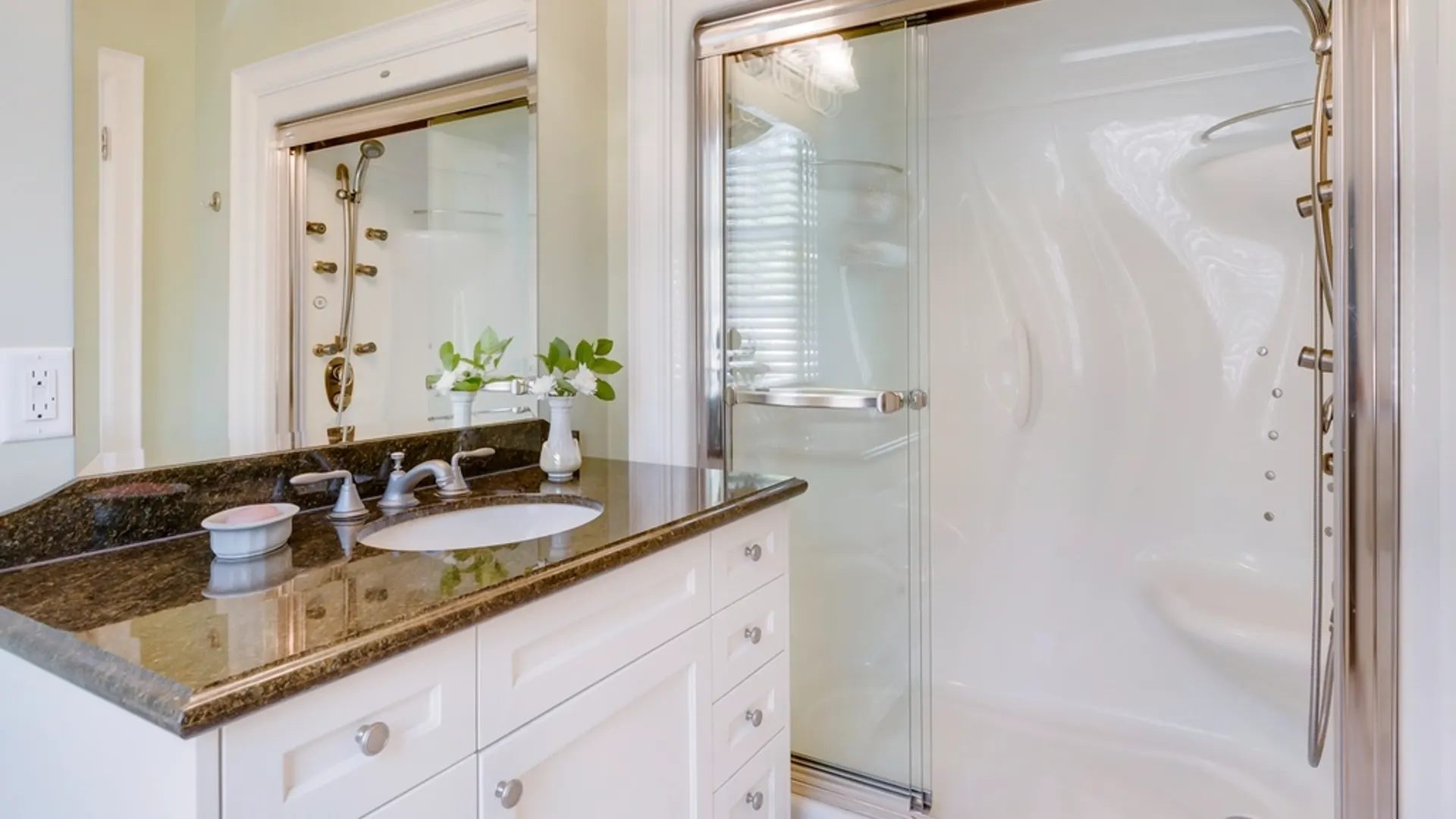
- Glass shower doors and panels
- Chrome, stainless steel and aluminum frames
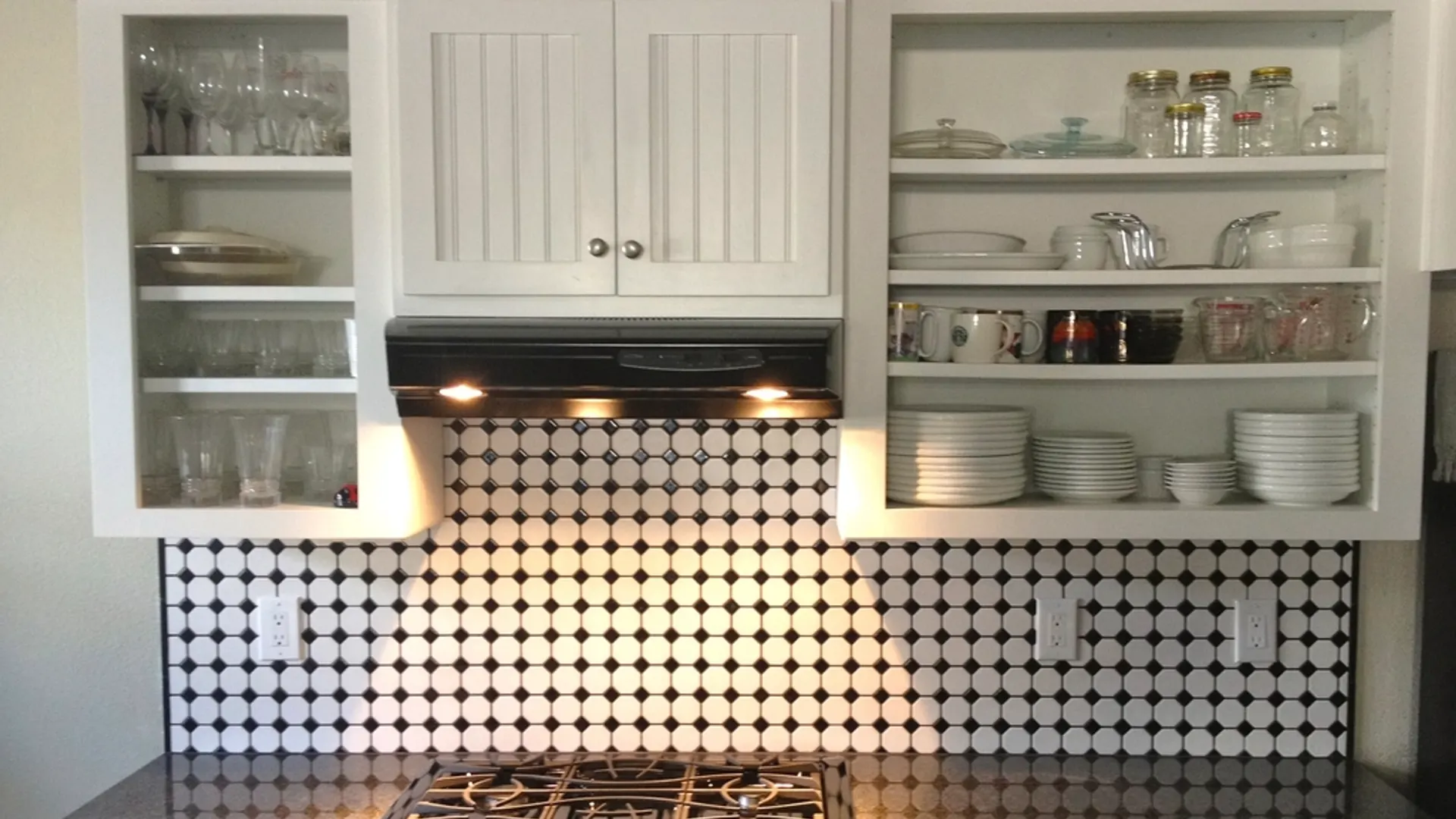
- Colored, patterned or dark tile where any solid color would stand out
- Backsplashes where the grout color doesn't match white
Keep in mind: clear silicone can look slightly milky when first applied and becomes clearer as it cures. Because it is see-through, anything under it shows too, such as dirt, old caulk or backer rod, so clean prep matters. Clear also shows dirt that collects on top of the bead in the same way any sealant does, so regular cleaning still matters in wet areas.
When to choose translucent white
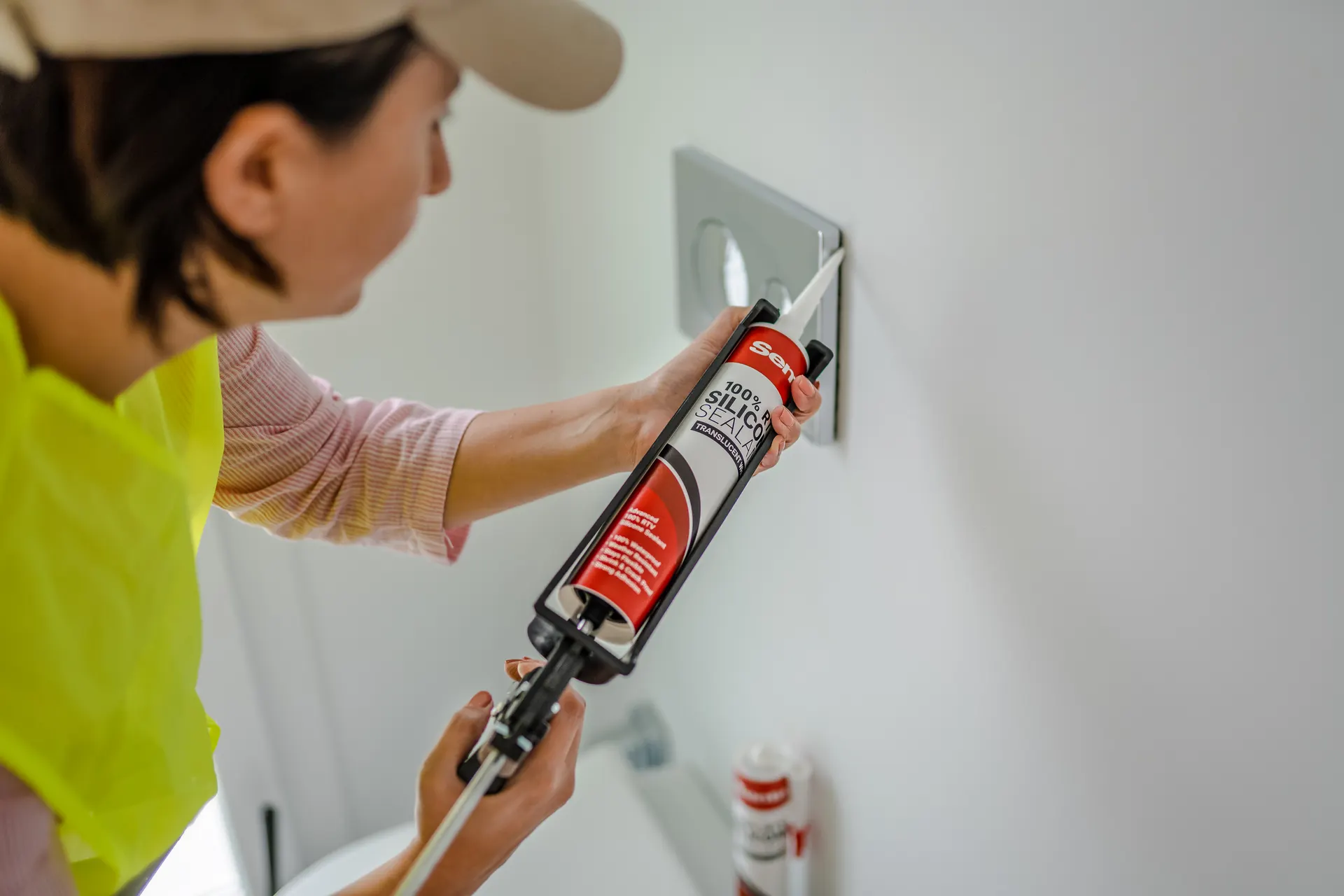
Translucent white sits between the two. It has a soft, frosted look that lightens the joint without the stark contrast of solid white.
Good for:
- Frosted or textured glass
- Off-white, cream or light gray tile where solid white looks too bright
- Joints where clear would show what is underneath and white would look too heavy
- General-purpose sealing where you want a neutral, forgiving finish
A quick guide by location
| Location | White | Clear | Translucent white |
|---|---|---|---|
| White tub and white tile | Natural fit | Works | Works |
| Glass shower door, metal frame | Possible with white frames | Natural fit | Good with frosted glass |
| Colored or dark tile | Stands out | Natural fit | Softer contrast |
| Kitchen backsplash | With white grout | Most designs | Light or neutral tile |
| Aluminum window frames | With white frames | Natural fit | Works |
Don't plan to paint over it
Silicone is not paintable, so pick the color you want to live with. If you need the joint to match a painted wall or trim exactly, use a paintable siliconized acrylic latex caulk instead and paint it after it cures. That works for dry, porous surfaces like trim and drywall, but not for joints permanently exposed to water. Our article on silicone vs. acrylic caulk explains the trade-offs.
Remember the surface limits
Color doesn't change chemistry. All three Senta colors are acetoxy silicone, so none of them should be used on porous natural stone, concrete, mirrors, or copper, brass, lead and other sensitive metals. For natural stone, follow the stone supplier's recommendation for a stone-safe, neutral-cure sealant.
Still unsure? Test it
If you can't decide, run a short test bead on a scrap piece of the same tile or in an out-of-sight spot, let it cure for a day, and look at it in the room's normal light. Colors look different under bathroom lighting than they do on the cartridge.
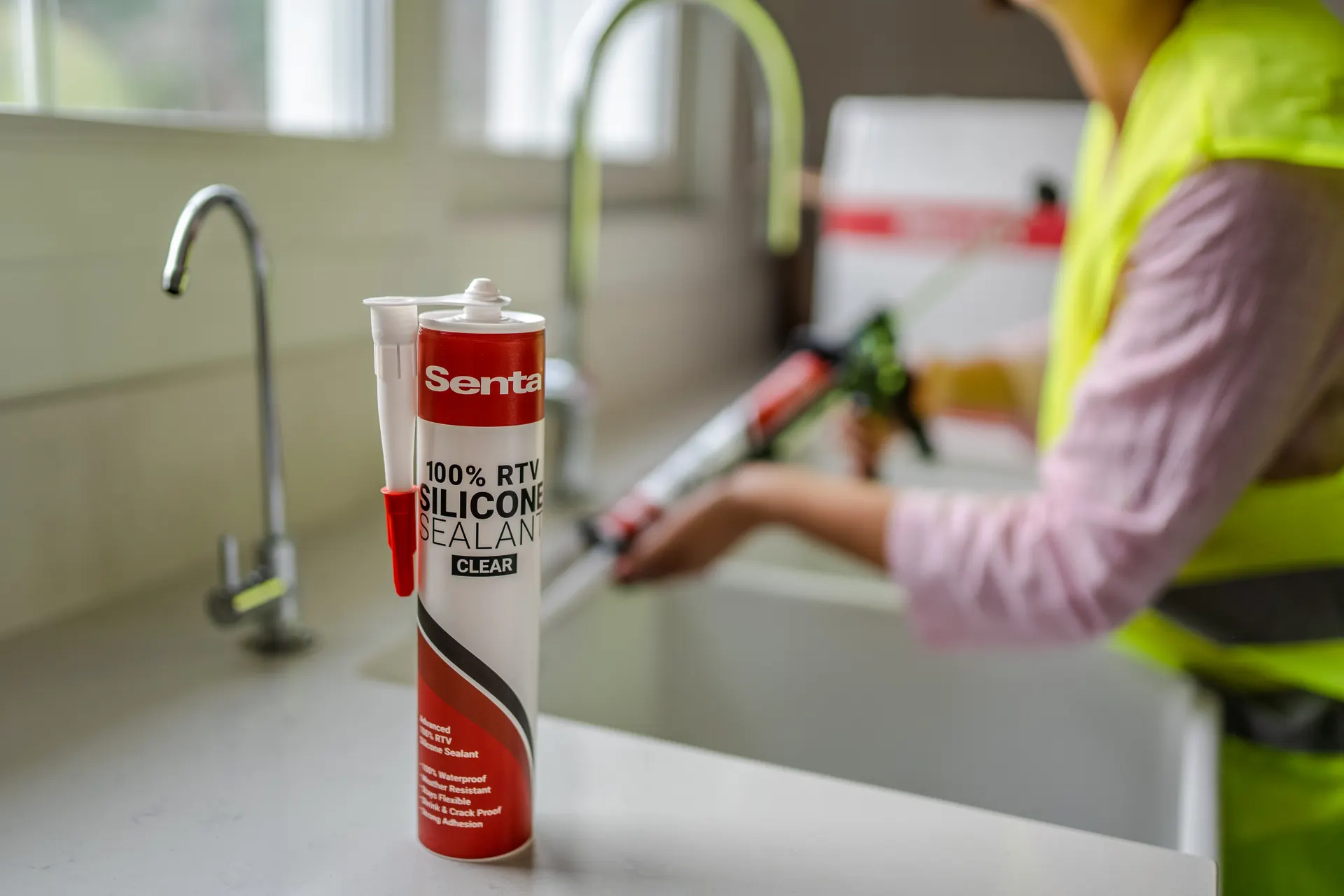
You can see all three standard colors side by side: Senta 100% RTV Silicone in White, Clear and Translucent White.
FAQ
Is clear silicone as strong as white silicone?
For Senta 100% RTV Silicone, all three colors share the same published specifications, including tensile strength ≥ 215 psi and elongation at break ≥ 350 %. Color is an appearance choice.
Why does clear silicone look white when I apply it?
Clear silicone can look milky when fresh and becomes clearer as it cures. Give it time to cure before judging the final look.
Can I get silicone in other colors?
Senta silicone comes in White, Clear and Translucent White as standard, with custom colors available on request. Use our contact page to ask about options.