ASTM C920 explained: what Type S, Grade NS and Class 25 mean
ASTM C920 is the US standard specification for elastomeric joint sealants, and the code on the label tells you three things: Type S means single-component, Grade NS means non-sag, and Class 25 means the sealant can handle joint movement of ±25 % of its width. If a sealant is labeled "ASTM C920 Type S, Grade NS, Class 25", it comes out of one cartridge, stays put in vertical joints and has been tested to flex a quarter of the joint width in both directions.
What ASTM C920 covers
ASTM C920 is a specification, not a single test. It sets the minimum performance a cured, rubber-like (elastomeric) sealant has to meet to be used in building joints, and it points to a set of test methods for things like movement capability, adhesion, hardness and staining. Architects and spec writers use it to describe the sealant they want without naming a brand. Contractors see it on submittals, product labels and technical data sheets.
The designation is a short code made of a few parts. Here's what each one means.
Type: S or M
- Type S (single-component): ready to use straight from the cartridge or sausage. It cures by reacting with moisture in the air (or by another mechanism built into the product). No mixing.
- Type M (multi-component): two or more parts that are mixed on site before use. Common in large commercial jobs.
For almost all residential and light commercial work, you'll be using Type S.
Grade: NS or P
- Grade NS (non-sag): the sealant holds its shape in vertical and overhead joints without slumping. This is the grade you want for window perimeters, wall joints and anything that isn't flat.
- Grade P (pourable): self-leveling, made for horizontal joints such as floor or pavement joints where the sealant needs to flow and level out.
A non-sag sealant is often checked with a slump test; Senta's technical data sheet, for example, reports 0 in sag under ISO 7390.
Class: what ASTM C920 Class 25 means
The class is the movement the sealant has been tested to handle, expressed as a percentage of the joint width in extension and compression. Classes in the standard include 12.5, 25, 35, 50 and 100/50.
Class 25 means ±25 %. Picture a joint that is 1/2 in wide when you seal it. A Class 25 sealant is tested to stretch until the joint is about 5/8 in and compress until it's about 3/8 in, repeatedly, without tearing or losing its bond. That covers the normal seasonal expansion and contraction of many window, door, siding and trim joints.
A higher class handles more movement. A lower class is fine for joints that barely move. The class only works as rated if the joint is designed properly, with the right width and depth, so see our guide to joint size and backer rod.
Use: where the sealant is rated to go
The standard also includes "Use" designations that describe what the sealant was tested for:
- T: traffic areas (pedestrian or vehicle)
- NT: non-traffic areas
- I: joints that will be continuously immersed in liquid
- M, G, A, O: substrates the sealant was tested on, such as mortar (M), glass (G), aluminum (A) and other surfaces (O)
Not every product lists every Use code. If a spec calls for a specific one, check the product's technical data sheet to confirm it's covered.
Reading a real label
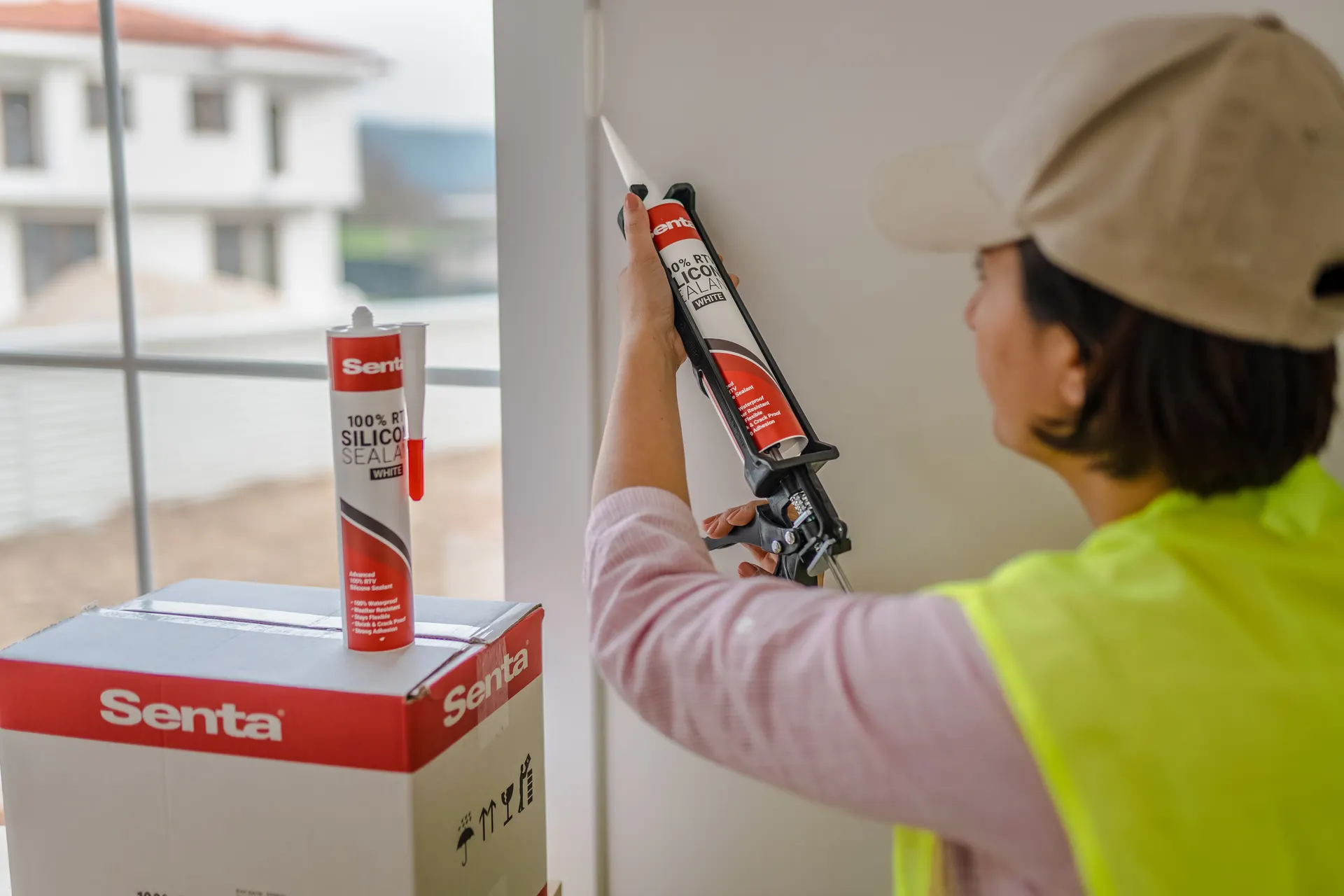
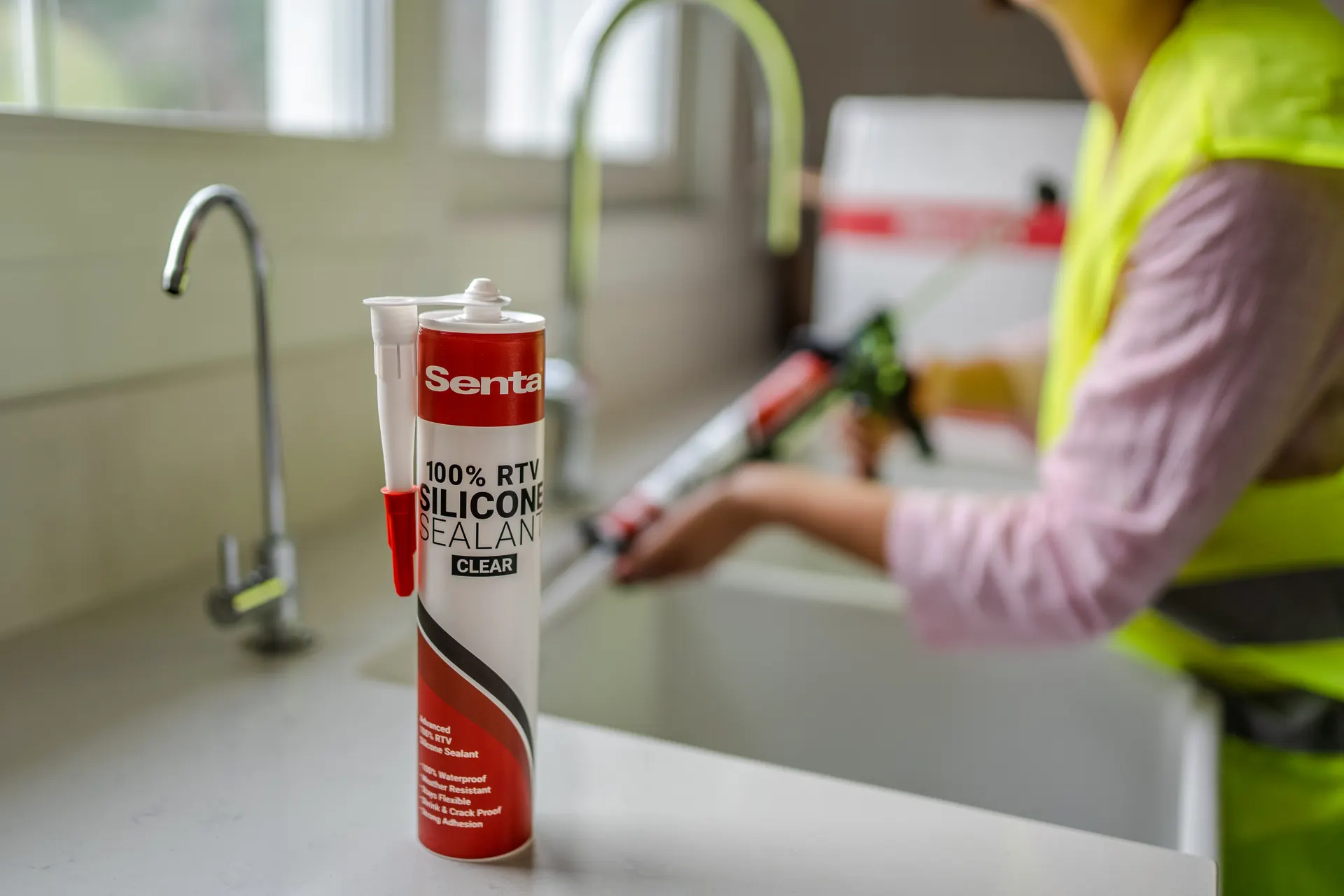
Senta 100% RTV Silicone is designated ASTM C920 Type S, Grade NS, Class 25. In plain terms:
- One component, moisture cure, no mixing (Type S)
- Holds in vertical and overhead joints with 0 in sag (Grade NS)
- Joint movement of ±25 % (Class 25)
It also lists CE EN 15651 (façade, glazing, sanitary), MIL-A-46106A, TT-S-00230C and TT-S-01543A. Those are separate standards from other systems; ASTM C920 is the one most US specs reference for building joints.
What ASTM C920 doesn't tell you
A C920 rating is a useful baseline, but it doesn't answer every question:
- Chemistry. Silicone, polyurethane and other sealant types can all meet C920. Cure type matters too: acetoxy silicone, for example, isn't for porous stone, mirrors or sensitive metals like copper and brass.
- Paintability. C920 says nothing about whether you can paint the sealant. Most 100% silicones, including Senta's, can't be painted.
- Every substrate. A rating on glass and aluminum doesn't mean the sealant suits concrete or natural stone.
- Service life on your job. Joint design, surface prep and workmanship matter as much as the rating.
That's why the technical data sheet is still the document to read before you choose a sealant. Our guide on how to read a sealant TDS walks through it section by section.
FAQ
Is ASTM C920 Class 25 good enough for windows and doors?
For many residential window and door perimeter joints, ±25 % movement is a common requirement. If a project spec calls for a higher class, follow the spec.
Does ASTM C920 apply to acrylic latex caulk?
ASTM C920 is written for elastomeric sealants. Acrylic latex caulks are typically covered by other specifications, so check each product's data sheet for the standards it lists.
Where do I find a product's ASTM C920 designation?
Look on the cartridge label and the technical data sheet. Senta's documents are on the technical documents page.
To see the full designation and test values for Senta silicone, open the technical documents page.