Acetoxy vs. neutral-cure silicone
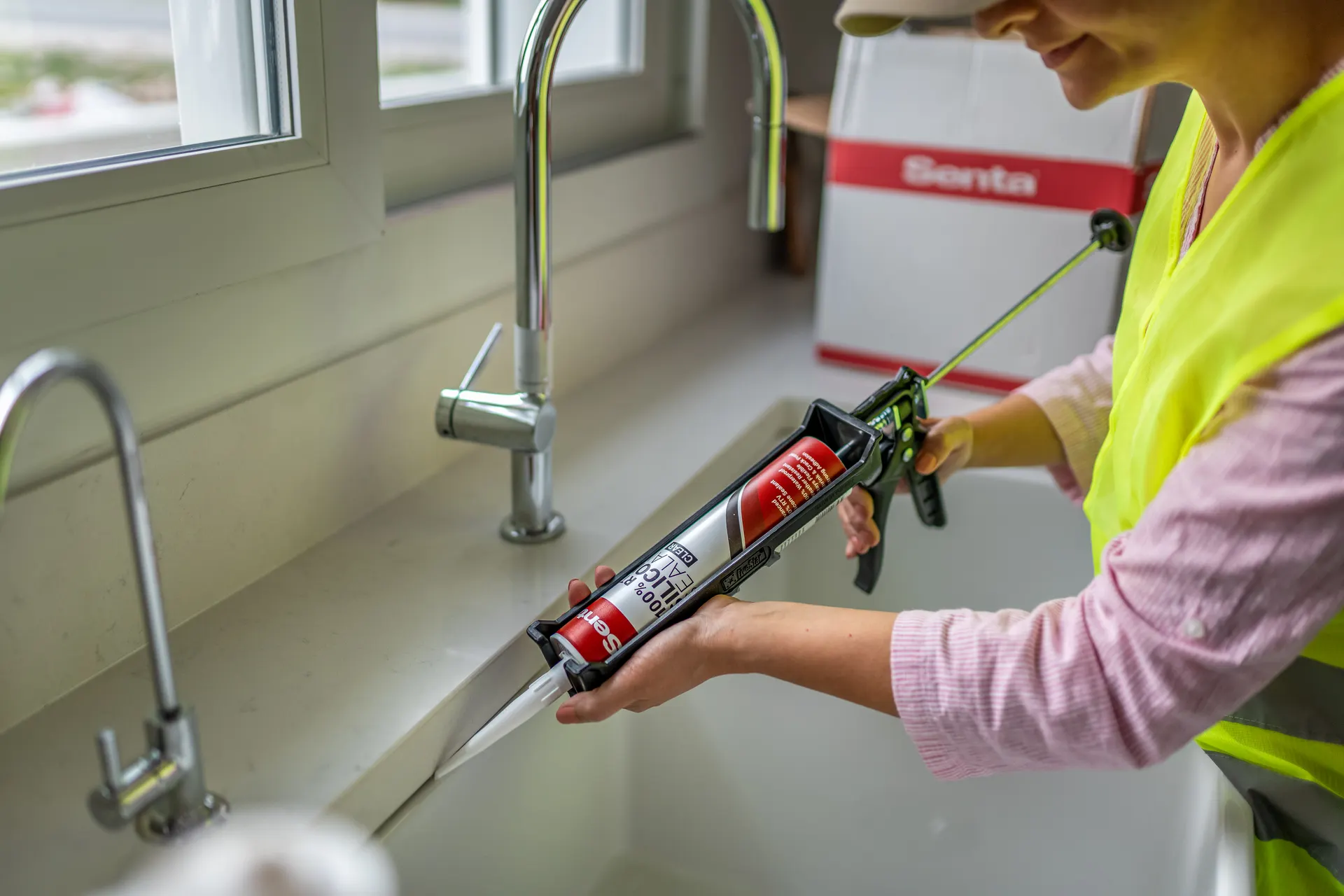
Acetoxy and neutral-cure silicones are both one-component RTV silicones that cure with moisture from the air. The difference is what they release while curing: acetoxy silicone releases acetic acid (the vinegar smell), while neutral-cure silicone releases non-acidic by-products. That acid is why acetoxy silicone works well on glass, glazed tile and aluminum but should be kept away from natural stone, mirrors and sensitive metals.
Here is how to tell which one your job needs.
How each type cures
All RTV silicones cure the same basic way: moisture in the air triggers a reaction that links the silicone into an elastic rubber. During that reaction, a small amount of by-product is released.
- Acetoxy silicone releases acetic acid. You can smell it as the sealant cures. The smell fades once it has cured.
- Neutral-cure silicone releases by-products that are not acidic, such as alcohol or other compounds depending on the formula. Odor is usually milder.
Senta 100% RTV Silicone is a 100% acetoxy silicone.
Acetoxy vs neutral cure silicone: side by side
| Acetoxy silicone | Neutral-cure silicone | |
|---|---|---|
| By-product | Acetic acid (vinegar smell) | Non-acidic (varies by formula) |
| Typical surfaces | Glass, glazed tile, porcelain, aluminum, many metals, wood | Same, plus many stone, masonry and sensitive surfaces |
| Natural stone | Not recommended | Often specified (check stone supplier) |
| Mirrors | Not recommended | Many formulas made for mirrors |
| Copper, brass, lead | Not recommended | Generally the choice |
| Concrete and porous surfaces | Not recommended | Depends on formula |
| Ventilation | Needed while curing | Still a good idea |
Where acetoxy silicone works well
Acetoxy silicone is a common choice for everyday sealing on non-porous surfaces:
- Tubs, showers and shower doors
- Sinks and backsplashes with glazed tile, glass or stainless steel
- Glass and aluminum frames
- General household and maintenance sealing
Senta 100% RTV Silicone adheres to glass, aluminum, metals, wood and most common non-porous building materials. It is mold and mildew resistant, UV and weathering resistant, and meets ASTM C920 Type S, Grade NS, Class 25, plus CE EN 15651 for façade, glazing and sanitary uses.
Where acetoxy silicone should not be used
Because of the acid released during curing, Senta's limitations are clear:
- Porous natural stone such as marble, granite and other natural stone. The sealant is not recommended on these surfaces.
- Concrete and other porous surfaces.
- Mirrors. The acid can attack the reflective backing.
- Copper, brass, lead and other sensitive metals. The acid can corrode or discolor them.
- Bitumen, neoprene and certain organic elastomers. These are not compatible.
- Totally confined spaces, where air cannot reach the sealant to cure it and the by-product cannot escape.
It is also worth knowing that acetoxy silicone can yellow if exposed to bleach or HCl-based brick cleaners while it is curing.
When to choose a neutral-cure silicone
Reach for a neutral-cure silicone when the job involves one of the surfaces above. Common examples:
- Natural stone countertops, vanities and shower walls: follow the stone supplier's recommendation for a stone-safe, neutral-cure sealant.
- Mirror installation: use a sealant or adhesive made for mirrors.
- Copper sinks, brass fixtures or lead flashing.
Neutral-cure products vary a lot from one formula to the next, so always read the specific product's data sheet for compatible surfaces.
How to decide in 30 seconds
- Is any surface natural stone, concrete, a mirror, or copper, brass or lead? Use a neutral-cure product suited to that surface.
- Are both surfaces glass, glazed tile, porcelain, aluminum, stainless steel or similar non-porous materials? An acetoxy silicone like Senta is a good fit.
- Will the joint be painted? Neither silicone is paintable. Use a siliconized acrylic latex caulk instead.
If you are new to silicone terminology, start with our explainer on what 100% RTV silicone means.
Working safely with acetoxy silicone
- Ventilate the room: open a window or run an exhaust fan while applying and curing.
- Wear gloves and avoid contact with eyes; safety glasses are a good idea for overhead work.
- Read the SDS before use. It is available on our technical documents page.
For glass, tile and aluminum, Senta 100% RTV Silicone in Translucent White is one of three standard colors.
FAQ
Is acetoxy silicone bad for metal?
Not for all metals. Senta acetoxy silicone adheres to aluminum and many common metals, but it should not be used on copper, brass, lead or other sensitive metals, which the acid can affect.
Can I use acetoxy silicone on granite or marble?
It is not recommended. Acetoxy silicone is not for porous natural stone. Follow the stone supplier's recommendation for a stone-safe, neutral-cure sealant.
How do I know if a silicone is acetoxy?
Check the data sheet or label for the cure type. A strong vinegar smell while it cures is also a giveaway.